
 English
 Español
 عربى
 View More

 Industry News
Home / News / Industry News / CPE in PVC Compounding: Chlorinated Polyethylene and Heat Stabilizer Balance
CPE in PVC Compounding: Chlorinated Polyethylene and Heat Stabilizer Balance
Complete Stabilizer Platforms for Every PVC Application
Content
A rigid PVC profile line that has run clean for two years can start showing a yellow edge at the die within one shift of adding three phr of CPE. Nothing else changed on the sheet. The stabilizer did not get worse; the melt simply began generating more hydrogen chloride than the package was designed to absorb.
CPE is an impact modifier, not a stabilizer, and it is the additive most often bolted onto an existing formula without re-checking the thermal budget. What follows covers what the abbreviation means in plastics work, how it interacts with lead, calcium/zinc and barium/zinc systems, how to choose a grade, and how to rebalance dosage without chasing defects down the line.
25-42%
Chlorine content across commercial CPE grades
3-10 phr
Typical impact-modifier loading in rigid PVC
5-15%
Extra stabilizer headroom often needed at 3 phr CPE
What CPE Actually Means in PVC Compounding
CPE stands for chlorinated polyethylene: a polyethylene backbone chlorinated to roughly 25 to 42 percent by weight, used in PVC as an impact modifier and melt-strength aid.
Definition. CPE is a saturated polyolefin with chlorine substituted along the polymer chain, produced by chlorinating polyethylene in aqueous suspension or in solution. In a PVC compound it is only partially compatible, so it disperses as separate domains that absorb impact energy, bridge growing cracks and relieve notch stress in the rigid matrix.
Because compatibility is partial, dispersion quality matters more than the datasheet. A well-dispersed 35 percent grade at 5 phr will beat a poorly dispersed 36 percent grade at 8 phr on falling-dart impact, and it will do it with less haze and fewer gels.
The abbreviation itself is crowded, and search results reflect that. If your query was about something other than plastics, the table below should point you in the right direction.
| Expansion | Field | Relevant to PVC work |
| Chlorinated polyethylene | Polymer additives | Yes, impact modifier |
| Continuing professional education | Accounting and finance | No |
| Common Platform Enumeration | IT security | No |
| Carbapenemase-producing Enterobacterales | Clinical microbiology | No |
| Co-polyester elastomer filament | 3D printing | No, different polymer family |
How CPE Changes the Heat Stabilizer's Workload
Raising CPE loading increases the hydrogen chloride the stabilizer must neutralise, so the stabilizer level usually has to rise with it.
Chlorination is not uniform. Along the CPE chain there are tertiary chlorides and allylic chlorides far weaker than the secondary chlorides in the backbone. They begin eliminating HCl at temperatures the compound reaches inside the extruder barrel, roughly the same window as the PVC resin. The stabilizer therefore sees two HCl sources instead of one, and it sees them at the same time.
CPE buys toughness. It does not buy thermal stability. Every phr you add is another phr of HCl the stabilizer has to absorb.
When a defect appears mid-run, it is worth separating stability problems from compounding problems before touching dosage. Our breakdown of stabilizer selection and defect control in extrusion compounds walks through that sequence step by step.
Which CPE Grade Fits Your Compound
Chlorine content is the first specification to fix, because it sets the trade-off between impact efficiency, dispersion difficulty and secondary properties such as flame retardancy and oil resistance.
The 35 to 36 percent range does most of the work in rigid PVC. Grades above 40 percent chlorine carry a noticeably heavier HCl load and are harder to disperse, which is why they are usually reserved for flame-retardant or oil-resistant parts rather than general profile work.
| Application | Typical chlorine | Stabilizer note |
| Rigid window profiles | 35-36% | Lead or calcium/zinc one-pack; review colour hold after weathering |
| Rigid pipes and fittings | 35-36% | Tolerates higher filler loading; check weld strength, not just impact |
| Foamed and Celuka boards | 35-36% | Melt strength matters as much as stability; lubricant balance is critical |
| Flexible sheet and cable | 30-34% | Plasticiser interaction dominates; lower fusion demand |
| Flame-retardant parts | 40% and above | High HCl load; stabilizer headroom and dispersion both need attention |
Two CPE grades with identical chlorine content can behave differently on the same line. Residual crystallinity and particle morphology decide whether you get a smooth dispersion or a screen pack full of gels.
Dosage and Line-Side Adjustments
Treat any CPE change as a formulation change and re-run the stability tests instead of adjusting on the fly.
- Baseline without CPE. Record static heat stability in an oven at barrel temperature plus 10 degrees, and dynamic stability on a torque rheometer. Note the time to colour change, not only the final colour.
- Add CPE at target loading. Repeat both tests the same day with the same resin lot. A 20 to 30 percent drop in stability time is normal and tells you how much headroom the compound needs.
- Rebalance lubricants first. If torque and fusion time moved, fix that before touching the stabilizer level. Adding stabilizer to compensate for an over-lubricated or under-fused compound hides the real cause.
- Raise stabilizer in small steps. Increase in 5 percent increments and re-test colour hold at five-minute intervals until stability time matches the original baseline.
- Confirm on the line. A 30 to 60 minute run at production rates exposes plate-out, die drool and colour drift that bench tests never show.
Rule of thumb: 3 phr of a 35 percent CPE grade often justifies 5 to 15 percent more stabilizer. The exact figure belongs to your filler loading, barrel profile and target impact, not to a generic table.
Application Notes: Pipes, Profiles, Boards and Cable
CPE loading and stabilizer choice move together, and the right pairing differs by product family.
Rigid pipes and fittings
CPE at 3 to 6 phr raises falling-dart impact in buried and large-diameter pipe. Lead one-pack systems remain common in pressure pipe, while calcium/zinc is chosen where lead-free output is required.
Window profiles
Five to eight phr of a 35 percent grade is typical for profile and window systems. Weathering performance depends on the stabilizer as much as on the CPE, so co-stabilizers and pigment loading should be reviewed together.
Foamed and rigid boards
In foamed board and Celuka work, CPE contributes melt strength during expansion. Over-dosing closes cells and raises density, so the practical ceiling is usually set by foam quality rather than by impact targets.
Wire and cable compounds
Flexible insulation and sheathing use softer grades alongside plasticiser systems, where the stabilizer must handle both the CPE load and the plasticiser's effect on fusion and volatiles.
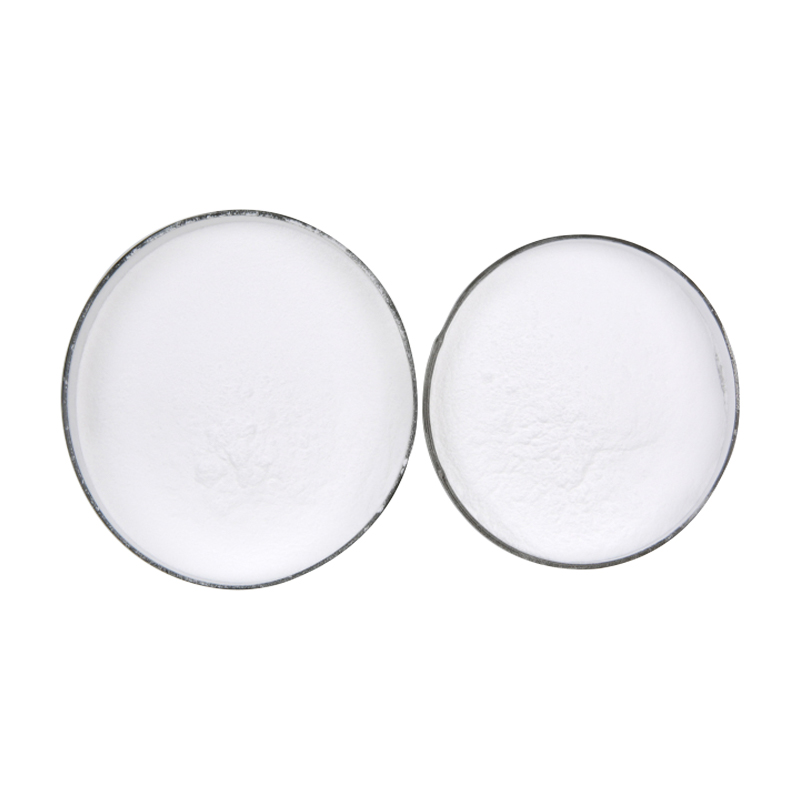 Calcium/Zinc One-Pack Stabilizer for PVC PipesEnvironment-friendly Ca/Zn powder for PVC pipe and fitting processing, with pipe and fitting grades and listed dosages from 3.0 to 6.0.View Product →
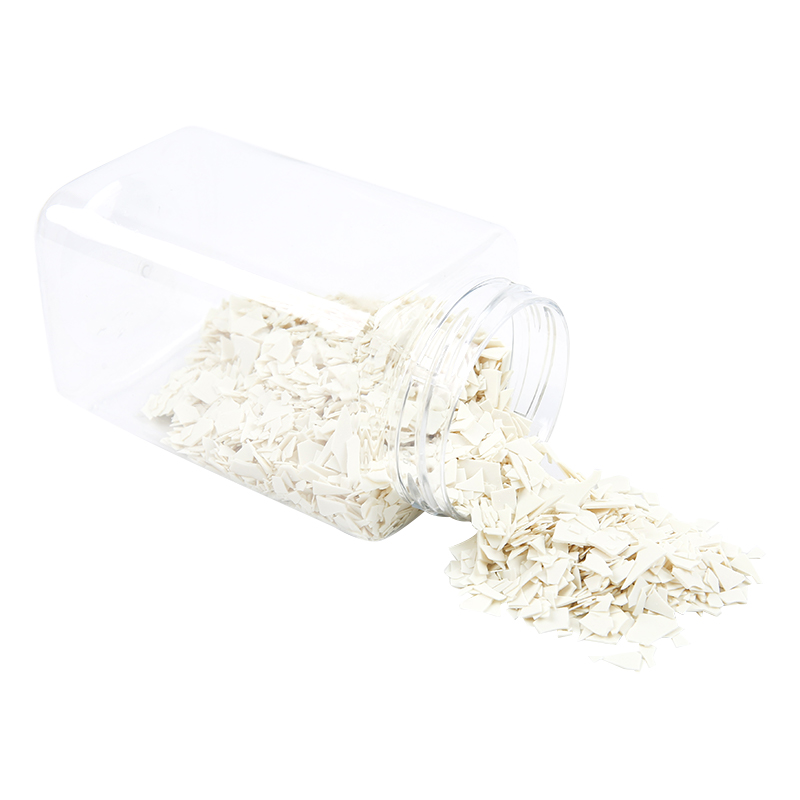 Lead-Based One-Pack Stabilizer for PVC Window ProfilesFlake lead-based stabilizer for PVC window profiles, with grades distinguished by lead content, filled-formula suitability, and dosage.View Product →
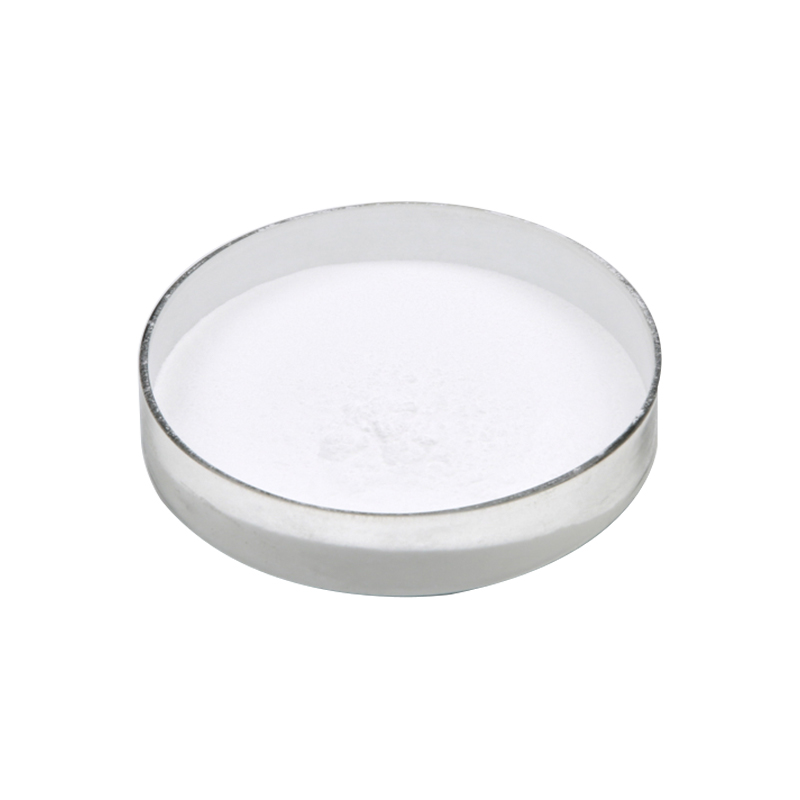 Calcium/Zinc One-Pack Stabilizer for PVC BoardsEnvironment-friendly Ca/Zn powder for PVC board production, including foamed and decorative boards, with listed grades at 6.0–8.0 dosage.View Product →
Defect Triage When CPE Is in the Mix
Most CPE-related defects fall into five patterns, and each one points to a different first check.
| Symptom | Likely cause | First check |
| Yellow edge at the die that recovers downstream | Stabilizer headroom too low for the new HCl load | Static stability time against the pre-change baseline |
| Progressive darkening over a long run | Zinc burning or a depleted lead reserve | Stabilizer dosage and co-stabilizer level |
| Gels, fisheyes, rough surface | Poor CPE dispersion, often a high-crystallinity grade | Mixing temperature and screw configuration |
| Plate-out on the die lip | Lubricant imbalance triggered by higher CPE | Internal to external lubricant ratio |
| Impact strength below expectation | Coarse domains or excessive filler loading | Dispersion quality under a microscope |
If a defect appears only after a CPE change, revert the CPE before changing anything else. It is the cheapest variable to isolate and the one most likely to be responsible.
Frequently Asked Questions
Is CPE the same material as PVC?
No. PVC is polyvinyl chloride, built from vinyl chloride monomer. CPE is polyethylene that has been chlorinated after polymerisation. Both contain chlorine, which is why CPE disperses in PVC and why it adds to the HCl load during processing.
Does CPE require a different heat stabilizer?
It does not require a different stabilizer class, but it usually requires more of whichever class you already run. Lead one-pack, calcium/zinc and barium/zinc systems all work in CPE-containing compounds; dosage and lubricant balance are what change.
Which chlorine content should I use for rigid profiles?
35 to 36 percent is the standard impact-modifier range for rigid profiles and pipes. Lower chlorine grades behave more like softening co-agents, and grades above 40 percent are normally reserved for flame retardancy and oil resistance.
Can CPE be used in transparent PVC products?
Rarely. CPE domains scatter light, so transparent film and sheet usually rely on acrylic or MBS modifiers instead. At low loadings CPE can be acceptable in translucent profiles, but haze should be measured rather than estimated.
Start from the compound you actually run: barrel temperatures, filler loading, lubricant package and target impact. A stabilizer recommendation that ignores those four inputs is a guess, whichever abbreviation sits on the data sheet.
Let’s Build the Future Together
We are a company specializing in the research, development, production, and sale of PVC stabilizers.
Get a Quote
Product Categories
Quick Links
Contant us
-
 +86-15206141222
-
 zptian2008@163.com
-
 No. 66, Xingsheng Road, Nandu Town, Liyang City, Jiangsu Province, China
Copyright © JiangSu Uniwel Chemistry Co.,Ltd. All Rights Reserved.
 PVC Stabilizer Manufacturer PVC Stabilizer Supplier PVC Stabilizer Factory in China