

 English
 Español
 عربى
عربى Get a Quote


Formulating for Dimensional Stability Under Thermal Cycling
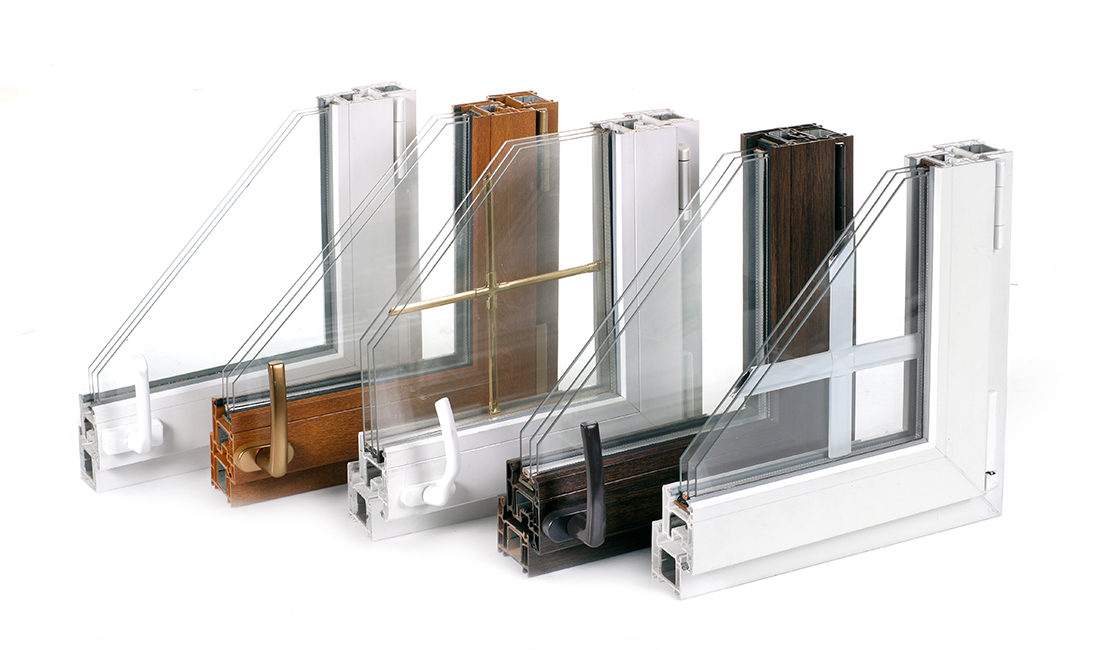
Profiles for windows and façade systems undergo significant daily and seasonal temperature swings. The linear thermal expansion coefficient of rigid PVC is approximately 50–60 × 10⁻⁶ m/m°C, which can translate into a length change of several millimetres per metre over a 40°C range. What is often underestimated is the contribution of the stabilizer package to the profile’s resistance to thermal creep and distortion under load. A stabilizer that forms a dense, homogeneous gelation network during fusion helps limit free volume and reduces stress relaxation at elevated service temperatures.
A robust PVC Window and Door Stabilizer must maintain low creep under thermal cycling conditions, which is often overlooked during formulation screening. The key lies in the type and distribution of metal soaps and co‑stabilizers—some combinations create a more ordered polymer morphology that resists irreversible deformation. High gelation uniformity, promoted by the right lubricant‑stabilizer synergy, directly correlates with improved heat deflection temperature (HDT) and better screw‑port retention in assembled frames.
How morphology influences long‑term service life
- Over‑lubricated systems may show low torque during extrusion but often yield a micro‑porous structure that collapses under sustained load.
- High‑efficiency calcium‑zinc stabilizers with layered hydrotalcite co‑stabilizers promote a finer primary particle fusion, which reduces creep rate by up to 30% compared with poorly balanced systems.
- Real‑world monitoring of installed profiles shows that dimensional stability failures most often originate not from PVC resin itself but from insufficient control of the stabilizer‑fusion interplay.
At Uniwel, our integrated approach to formulation science focuses on this exact morphology‑stability relationship, ensuring that profiles retain their designed shape even in extreme climates.
Co‑stabilizer Selection and Its Impact on Fusion Behavior
Co‑stabilizers are far more than auxiliary additives—they fundamentally alter the plastication and melt rheology of rigid PVC. The choice between β‑diketones, hydrotalcites, zeolites, or polyols determines not only the long‑term thermal stability but also the dynamic fusion characteristics in the extruder. When evaluating a PVC Profile Stabilizer for high‑speed extrusion, the balance between primary stabilizer and these secondary components becomes critical for achieving a wide processing window without sacrificing mechanical properties.
Each co‑stabilizer type interacts differently with calcium and zinc soaps, affecting metal ion availability and the timing of ionic cross‑linking during gelation. The table below summarises the primary influence of common co‑stabilizer families on fusion and early colour.
| Co‑stabilizer Type | Fusion Promotion | Early Colour Control | Long‑term Heat Stability |
|---|---|---|---|
| β‑diketones | Moderate | Excellent | Good |
| Hydrotalcites | High | Good | Excellent |
| Zeolites | Low‑Moderate | Variable | Very good |
| Polyols | Low | Limited | Moderate |
Uniwel’s integrated stabilizer solutions are designed with precisely tuned co‑stabilizer ratios that deliver rapid fusion and low plate‑out tendency, even at line speeds exceeding 5 metres per minute. The aim is to maintain a stable melt viscosity plateau that gives processors a forgiving operating window.
Managing Early Colour and Long‑Term Weatherability in White Profiles
The requirement for a brilliant white initial colour that resists yellowing for decades under UV exposure places extreme demands on the stabilizer formulation. For a PVC Window and Door Profile Stabilizer, initial colour is not merely an aesthetic metric; it indicates the efficiency of early‑stage HCl scavenging and the stability of the titanium dioxide‑polymer interface. Poor early colour often foreshadows accelerated chalking and gloss loss after several years of outdoor exposure.
Rutile TiO₂, even when surface‑treated, can participate in photocatalytic degradation if the stabilizer does not maintain an alkaline buffering capacity at the filler‑polymer boundary. Zinc‑based systems, if not properly buffered, can promote zinc chloride formation, which catalyses dehydrochlorination and causes pink or grey discolouration under combined heat and moisture. A well‑engineered stabilizer therefore does two things: it actively scavenges HCl from the earliest moment of thermal processing, and it provides a reservoir of long‑term acid acceptors that remain active throughout the service life.
Accelerated weathering: what the data really tells
- ΔE values after 8000 hours of QUV‑B or xenon‑arc testing correlate with outdoor Florida exposure only when the stabilizer’s thermal history is properly replicated in the test specimen.
- Micro‑cracking in weathered surfaces often traces back to insufficient melt homogeneity; the stabilizer’s internal‑external lubricant balance directly affects this homogeneity.
- Chalking index after 3 years of natural exposure can be reduced by over 40% when using an optimised calcium‑zinc stabilizer with a tailored hydrotalcite co‑stabilizer, compared to conventional calcium‑zinc blends.
In our experience at Uniwel, combining thermal stabilisation mechanisms with a deep understanding of weathering chemistry allows us to deliver profiles that maintain colour integrity far beyond standard warranty periods.
Extrusion Process Window: How Stabilizer Formulation Extends Throughput
The economic viability of window and door profile production hinges on metres per minute at a given dimensional tolerance. A stabilizer package influences the process window far beyond its thermal protection role. It acts as an internal lubricant modifier, a melt viscosity stabiliser, and a dispersion aid—all of which determine how high the screw speed can go before melt fracture, plate‑out, or burning occurs.
Key formulation levers for high‑speed lines
- Metal soap ratio (Ca/Zn): a slight shift towards higher zinc content can accelerate fusion but narrows the dynamic stability window; balancing with co‑stabilizers that delay zinc burn is essential.
- External lubricant synergy: the stabilizer’s wax‑type carrier and its melting range must align with the screw’s compression zone to prevent slippage while avoiding excessive shear heating.
- Plate‑out resistance: volatile organic components from low‑purity stabilizers condense on calibrators and downstream equipment, causing surface defects. A high‑purity stabilizer system keeps die‑lip build‑up to a minimum, extending cleaning intervals.
- Melt strength for calibrator draw: controlled gelation through the right stabilizer‑lubricant package ensures the hot profile can withstand the vacuum calibration forces without tearing or wall‑thickness variation.
Uniwel’s long‑standing partnership with high‑volume profile extruders has shown that an optimised stabilizer can increase line speed by 10–15% while simultaneously reducing scrap rate, purely through a wider, more stable processing window. This is where formulation science and industrial practice converge to deliver real operational gains.


