

 English
 Español
 عربى
عربى Get a Quote
Understanding Synergistic Co-Stabilizer Mechanisms in Ca/Zn Systems
A common misconception is that a calcium-zinc primary stabilizer alone can deliver adequate thermal protection across all PVC processing conditions. In reality, the performance of any PVC Heat Stabilizer in the Ca/Zn family depends heavily on its co-stabilizer package. Zinc stearate provides excellent early colour hold by scavenging labile chlorine atoms, but zinc chloride accumulation can trigger catastrophic “zinc burning”—a sudden, irreversible degradation event. Calcium stearate moderates this by exchanging with zinc chloride, yet the reaction kinetics are too slow to rely on this pair alone at elevated processing temperatures.
This is where synergistic co-stabilizers become indispensable:
- β-diketones (such as dibenzoylmethane or stearoyl benzoyl methane) complex with zinc intermediates, extending the induction period before degradation initiates. They are particularly effective at suppressing early pinking in white profiles.
- Hydrotalcites (layered double hydroxides) act as acid acceptors with a layered structure that traps HCl between their galleries. Their anion-exchange capacity provides long-term stability without the volatility issues associated with some organic co-stabilizers.
- Phosphites function as secondary antioxidants, decomposing hydroperoxides that would otherwise accelerate chain scission. Tris(nonylphenyl) phosphite remains widely used, though liquid phosphites with lower volatility are gaining preference in high-temperature extrusion.
- Epoxidized soybean oil (ESBO) serves a dual role as a plasticizer and HCl scavenger. Its oxirane rings open to neutralize evolved HCl, but excessive dosage can cause exudation in rigid formulations—typically, 3-7 phr is the practical ceiling for rigid PVC.
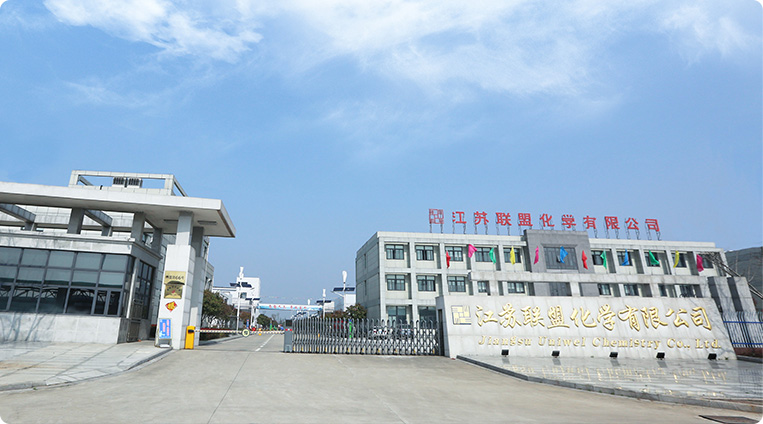
At Jiangsu Uniwel Chemistry Co., Ltd., our technical team evaluates co-stabilizer synergy through dynamic torque rheometry paired with colour hold testing, ensuring that each formulation maintains a processing window wide enough to accommodate real-world fluctuations in shear and temperature.
Matching Stabilizer Chemistry to Your Processing Method
Not all stabilizer systems are interchangeable across processing methods. A formulation optimized for twin-screw extrusion of window profiles can fail catastrophically when dropped into a high-shear injection moulding cycle. The table below summarises the key distinctions that guide our Custom PVC stabilizer formulation work at Uniwel.
| Processing Method | Dominant Thermal Demand | Stabilizer Priority | Common Failure Mode |
|---|---|---|---|
| Twin-screw extrusion (profiles, pipes) | Moderate, prolonged heat history | Long-term stability, broad processing window | Yellowing after 20–30 minutes residence time |
| Injection moulding | High shear, rapid heat spike | Early colour hold, lubricity balance | Burn marks, flow lines, zinc burning |
| Calendering (films, sheets) | Repeated heating-cooling on rolls | Plate-out resistance, colour consistency | Deposit build-up on calender rolls |
| Foaming (rigid boards, SPC flooring) | Exothermic decomposition + gas evolution | Alignment with blowing agent kinetics | Cell collapse, uneven density |
In foaming applications especially, the stabilizer must not interfere with the decomposition profile of azodicarbonamide or sodium bicarbonate-based blowing agents. A mismatch here can shift the gelation point past the gas evolution peak, trapping bubbles before the melt has adequate strength to contain them. Our approach at Uniwel is to map the torque curve and gas evolution profile simultaneously, adjusting co-stabilizer ratios until the two events align within a narrow temperature window.
Diagnosing and Preventing Plate-out in PVC Processing
Plate-out—the gradual accumulation of a waxy or powdery deposit on die lips, calibrators, and calender rolls—remains one of the most persistent production headaches in the PVC industry. Beyond the obvious downtime required for cleaning, plate-out causes surface defects, dimensional inconsistency, and in transparent products, visible haze that cannot be remedied downstream. As one of the established PVC Heat Stabilizer Manufacturers, we have investigated countless plate-out cases and found that the root cause is rarely obvious from a standard formulation review alone.
Common Stabilizer-Related Contributors
- Excess metal stearate exudation: When calcium or zinc stearate levels exceed the solubility limit in the PVC matrix at processing temperature, free stearates migrate to the metal surface and nucleate deposit formation.
- Incompatible co-stabilizer carriers: Some liquid phosphites or ESBO variants use mineral oil carriers that phase-separate under high shear, forming a sticky film on tooling surfaces.
- Volatile degradation by-products: Certain β-diketone ligands can partially volatilize at temperatures above 200°C, condensing on cooler downstream surfaces and trapping other particulates.
Practical Diagnostic Approach
When plate-out appears, we recommend collecting a deposit sample and subjecting it to Fourier-transform infrared spectroscopy (FTIR) analysis. A strong carbonyl peak around 1735 cm−1 typically points to stearate-rich deposits, while aromatic C=C stretches suggest β-diketone involvement. Coupling this with a review of your processing temperatures—particularly the first zone of the barrel or the roll temperatures in calendering—often reveals whether the issue is thermal or compatibility-driven. As one of the experienced PVC Heat Stabilizer Suppliers in China, Uniwel routinely assists customers with this forensic approach, helping them adjust formulations before the next production run.
Evaluating Total Cost of Ownership for Stabilizer Systems
Procurement decisions based solely on price per kilogram overlook the more significant cost drivers that a well-designed stabilizer system influences. In our experience at Jiangsu Uniwel Chemistry Co., Ltd., a stabilizer priced 15–20% higher on a per-kilo basis can still deliver a lower total cost of ownership when the following factors are accounted for.
- Scrap reduction: A wider processing window means fewer off-spec batches during shift changes, start-ups, or raw material lot variations. Even a 1% reduction in scrap rate can offset a significant stabilizer price premium in high-volume extrusion lines.
- Line speed preservation: Stabilizers that maintain melt viscosity stability allow higher throughput without risking degradation. A 5% increase in line speed translates directly to capacity gains without capital expenditure.
- Tooling maintenance intervals: Formulations prone to plate-out or corrosive decomposition products increase die cleaning frequency and shorten calibrator lifespan. Reducing cleaning downtime from weekly to monthly represents substantial labour and productivity savings.
- Regulatory future-proofing: Systems compliant with evolving environmental standards avoid the risk of reformulation costs or market access restrictions down the line—a consideration particularly relevant for export-oriented manufacturers.
When evaluating a stabilizer proposal, we encourage customers to request not just a data sheet but also torque rheometry curves and dynamic stability test results conducted at temperatures that reflect their actual production conditions—not idealized laboratory settings. A five-minute difference in colour hold time at 200°C can be the difference between continuous production and daily stoppages. Whether you are comparing options from multiple PVC Heat Stabilizer Manufacturers or refining an existing formulation, this holistic assessment approach ensures that the lowest-price option does not become the most expensive decision over a production year.


