

 English
 Español
 عربى
عربى Get a Quote
Maximizing Production Efficiency Through Fusion Control
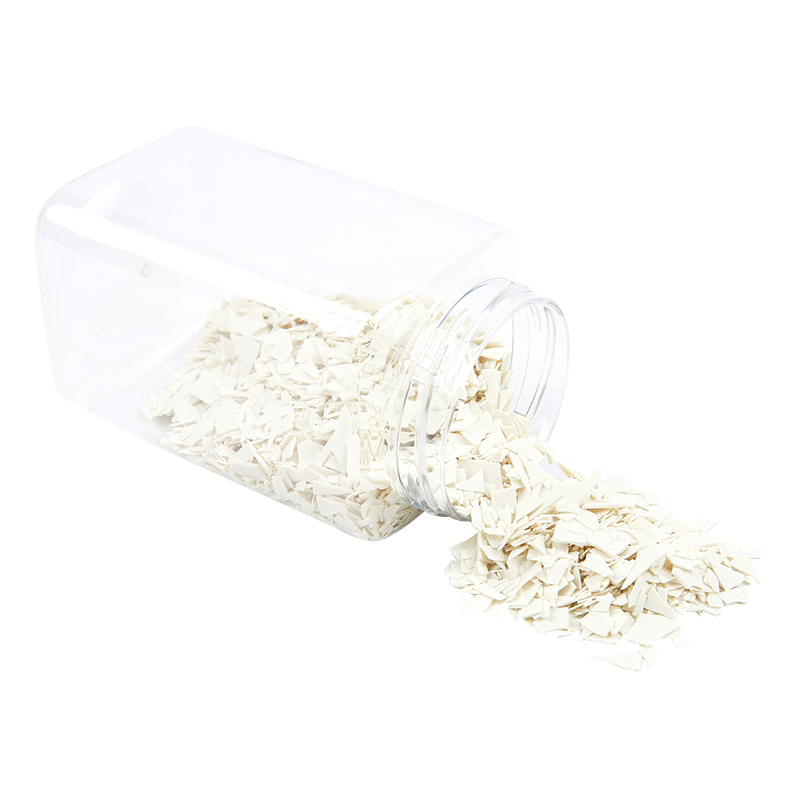
In profile extrusion, the degree of fusion is not a binary state but a continuum that directly controls impact strength, dimensional stability, and surface gloss. A precisely engineered Lead-Based One-Pack Heat Stabilizer For PVC Window Profile, such as the flake form supplied by JiangSu Uniwel Chemistry, incorporates a multi-component lubricant system that promotes rapid and uniform fusion at temperatures 5–8°C lower than many conventional systems. This thermal advantage translates into reduced screw torque and allows line speeds to increase by up to 12% without risking yellowing or burn marks.
To exploit this potential, set the barrel temperature profile to climb gradually from the feed throat to the metering zone, avoiding flat or inverted profiles that waste the external lubricant too early. A useful real-time indicator is the melt pressure reading before the adapter; a fluctuation of less than ±3 bar during a production run confirms that the one-pack stabilizer is delivering consistent gelation and lubrication release. Because our flake geometry disperses rapidly in the dry blend, batch-to-batch variation in fusion time is minimized, helping extruders maintain tight dimensional tolerances across multi-cavity window profile dies.
Precision Lubrication Design in One-Pack Systems
Internal vs. External Lubrication
The narrow processing window of rigid PVC makes lubricant selection a decisive factor for profile quality. Internal lubricants (polar, compatible with PVC) reduce melt viscosity and accelerate fusion, while external lubricants (non-polar, incompatible) migrate to the metal surface and control friction. In our Lead-Based One-Pack Heat Stabilizer For PVC Window Profile, these are pre-blended at an optimal ratio that yields uniform plastification and a flaw-free surface even at high screw speeds. The table below outlines the typical components found in such a system.
| Component | Type | Primary Function |
|---|---|---|
| Calcium Stearate | Internal | Promotes fusion, HCl scavenger |
| Paraffin Wax | External | Metal release, controls shear heating |
| Oxidized PE Wax | External/Internal | Controlled fusion delay, improves gloss |
| Fatty Acid Ester Complex | Internal | Enhances melt homogeneity, lowers torque |
Tailoring these ratios allows JiangSu Uniwel Chemistry to adapt the one-pack to specific extruder configurations. For instance, a high-shear twin-screw extruder benefits from a slightly higher external lubricant loading to prevent over-gelation, while a low-compression single-screw setup requires a more aggressive internal package. This balance, combined with the fine stability profile of the lead stabilizer, gives processors the freedom to run thinner-wall profiles without sacrificing corner weld strength or impact resistance.
Weathering Performance: The Stabilizer’s Role Beyond TiO₂
While rutile titanium dioxide is the primary UV barrier in white window profiles, the heat stabilizer system acts as a critical co-factor in long-term weatherability. Our PVC Window Profile Lead Based One Pack Stabilizer provides continuous acid scavenging throughout the product’s service life, intercepting the hydrogen chloride that would otherwise catalyze polymer chain scission under UV exposure. This mechanism helps maintain surface integrity and color, with typical formulations retaining a color change (ΔE) of less than 2.5 after 3,000 hours of Xenon arc testing (ISO 105-A02).
Moreover, the lubricant package embedded in the one-pack influences TiO₂ dispersion quality. Poor wetting can cause pigment agglomerates that act as chalking initiation points. As a supplier of PVC Window Profile Lead Based One Pack Stabilizer, JiangSu Uniwel Chemistry has optimized the wetting characteristics of our flake formulation to ensure TiO₂ particles are uniformly distributed, leading to a dense, chalk-resistant skin. For maximum outdoor durability, we recommend pairing our stabilizer with 5–8 phr of a high-grade rutile TiO₂ and keeping calcium carbonate filler below 10 phr in the capstock layer, as high filler levels can mask early signs of photo-oxidative degradation.
Storage Stability and Handling of Flake One-Pack Stabilizers
Preventing Moisture Pickup and Compaction
Flake-form lead-based stabilizers offer superior free-flow and dispersibility compared to powder blends, but their performance edge depends on correct storage. The recommended environment is a dry, ventilated warehouse at 10–35°C, away from direct sunlight and moisture sources. JiangSu Uniwel Chemistry delivers PVC Window Profile Lead Based One Pack Stabilizer in 25 kg multi-wall bags with an inner polyethylene liner that provides an effective moisture barrier. Adhering to the following practices preserves the product’s physical properties and dosing accuracy:
- Store bags on wooden pallets at least 15 cm away from walls and floors to allow cross-ventilation.
- Apply a strict first-in, first-out (FIFO) rotation; the stabilizer should ideally be consumed within 12 months from the date of packaging to ensure full activity.
- If bags have been exposed to high humidity, dry the flakes in a hot-air oven at 40–50°C for 2–3 hours. Do not exceed 60°C to avoid melting the lubricant components.
- Limit stacking height to 8 bags per pallet to prevent flake compaction, which could alter bulk density and affect gravimetric feeding.
- After opening a bag, re-seal it tightly or transfer the remaining content to a sealed container to minimize atmospheric moisture uptake.
Proper handling not only prolongs shelf life but also ensures that the excellent dispersibility and lubrication balance designed into the one-pack are fully transferred to your finished window profiles.


