
 English
 Español
 عربى
عربى
 View More

 Industry News
Home / News / Industry News / Barium Zinc Stabilizer: Uses, Benefits, and Selection Guide for PVC Processors
Barium Zinc Stabilizer: Uses, Benefits, and Selection Guide for PVC Processors
Complete Stabilizer Platforms for Every PVC Application
Content
Picture a flexible PVC sheet line running on a warm afternoon. The calender is turning smoothly, but the operator notices the edge of the web beginning to yellow, and a thin haze building up on the cooled roll. Within a few minutes, the production run moves from off-grade to scrap. Problems like this are rarely caused by the base resin alone; more often, the heat stabilizer has been pushed beyond its working range. Barium zinc stabilizers were developed to give flexible PVC processors a wide safety margin without relying on lead or cadmium. They perform consistently across plastisol coating, calendering and extrusion, and they remain one of the most practical choices for film, sheet, synthetic leather and coated fabric producers. The sections below explain what a barium zinc stabilizer is, where it fits best, and what to verify before integrating one into your formulation.
What Is a Barium Zinc Stabilizer?
Barium zinc stabilizers are mixed-metal heat stabilizer systems, supplied primarily as liquids. The active ingredients are barium carboxylates and zinc carboxylates dissolved in a compatible solvent, along with co-stabilizers, antioxidants and occasionally organic phosphites. The liquid form enables accurate metering, fast dispersion and easy incorporation into plastisols, which is why spread coating and calendering operations favor it.
The stabilization mechanism is well documented. When PVC is heated, it begins to release hydrogen chloride, and this process accelerates once it has started. The zinc component of the stabilizer neutralizes the HCl and exchanges chlorine atoms on the polymer chain, interrupting the degradation cascade. However, excess zinc causes sudden blackening known as zinc burning. Barium carboxylate prevents this by reacting with the zinc chloride that forms, regenerating the active zinc soap and producing harmless barium chloride. The balance between barium and zinc, together with the choice of solvent and co-stabilizers, is what separates a robust stabilizer from a marginal one.
Where Barium Zinc Stabilizers Are Used
Because of their compatibility with plasticizers and their clear, colorless appearance, barium zinc liquids dominate soft PVC applications. The most common include:
- PVC synthetic leather produced by spread coating or transfer coating
- Flexible films and sheets, including decorative and packaging films
- Flooring wear layers and coated fabrics
- Plastisols for dipping, slush molding and rotational casting
- Wallcoverings, tarpaulins and interior sheeting
Each process exposes the stabilizer to different shear and temperature conditions. A spread coater applies short, high-temperature peaks, while a calendering line adds sustained mechanical stress. For PVC synthetic leather, processors often use a dedicated formulation that balances long-term heat stability with softness and low plate-out; our barium-zinc heat stabilizer for PVC synthetic leather is one example designed for continuous coating operations. The same family of stabilizers also performs well in flexible PVC film and sheet processing, where clarity and roll release matter as much as thermal protection. Many producers of flexible PVC films and sheets run parallel trials with barium zinc and calcium zinc systems to compare color hold and plate-out over extended runs.
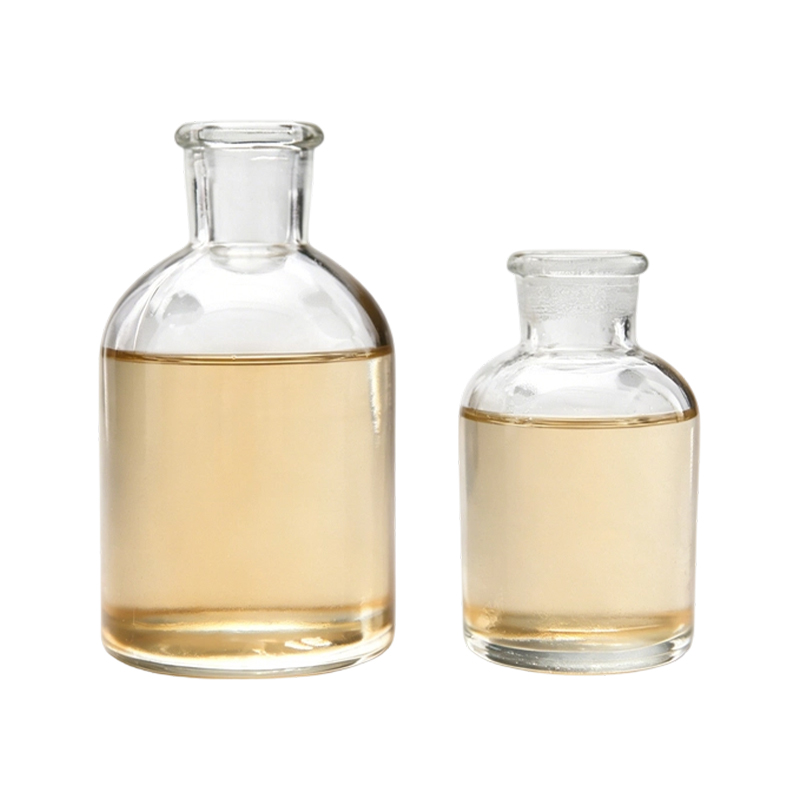 Liquid Barium/Zinc Stabilizer Suppliers - Ba/Zn Heat Stabilizer For PVC SynthetiJiangSu Uniwel Chemistry Co.,Ltd. offer Wholesale Ba/Zn Heat Stabilizer For PVC Synthetic Leather, Environment-friendly Liquid Barium/Zin...View Product →
Key Performance Benefits
When a barium zinc stabilizer is properly matched to the formulation, processors see improvements across several production parameters.
| Performance Factor | Production Impact |
|---|---|
| Long-term heat stability | Allows higher processing temperatures and longer dwell times without discoloration |
| Initial color retention | Keeps clear and white PVC bright during the first minutes of heating |
| Plate-out resistance | Reduces deposits on calender rolls, spreader knives and mold surfaces |
| Plasticizer compatibility | Prevents separation and fogging in highly plasticized compounds |
| Low odor and volatility | Important for automotive interiors and indoor applications |
These benefits are not theoretical. In many plants, the switch from a lead-based or cadmium-based system to barium zinc is made precisely because of plate-out problems that could not be solved by adjusting process parameters alone.
Barium Zinc vs Other Stabilizer Types
Barium zinc sits between the older heavy-metal systems and the fully calcium-zinc formulations. It shares the processing latitude of lead-based products without their regulatory burden, and it often provides better clarity than calcium zinc at a comparable cost.
| Stabilizer System | Heat Stability | Clarity | Regulatory Position | Relative Cost |
|---|---|---|---|---|
| Lead-based | Very good | Lower, opaque | Restricted in many markets | Low to moderate |
| Cadmium-based | Excellent | Good | Heavily restricted | Moderate |
| Calcium-zinc | Good | Good | Favorable | Higher |
| Barium-zinc | Good | Excellent | Favorable for flexible applications | Moderate |
For flexible PVC, barium zinc is not always a drop-in replacement for every recipe, but it is a realistic step for producers who want to move away from lead and cadmium without sacrificing processing latitude.
What to Verify Before You Switch
Changing a stabilizer system is not simply a matter of swapping the additive. The following points should be examined during the evaluation:
- Compatibility with your plasticizer system. Some plasticizers interfere with metal soaps, and a quick oven-heat test at 180°C will reveal color drift quickly.
- Dosage. Liquid barium zinc stabilizers usually run between 1 and 3 parts per hundred of resin, depending on the process. Start with the supplier's recommendation and test both initial color and dynamic heat stability.
- Processing method. Calendering, spread coating and extrusion place different demands on the stabilizer, so the product should be formulated for your specific shear and temperature profile.
- Batch consistency. Viscosity and metal content should be checked because both affect metering and dispersion. A supplier with ISO 9001 quality management normally documents these parameters.
- Storage behavior. Liquids can thicken or separate in cold conditions, so verify the recommended storage temperature range and shelf life.
For a more detailed look at the interaction between heat stability and transparency, our liquid barium zinc stabilizer heat stability and transparency guide explains how to read oven-heat and clarity test results in practice.
Choosing a Supplier With Real Production Experience
Stabilizer performance is defined by small formulation details: the barium-to-zinc ratio, the type of organic acid, the solvent carrier, and the co-stabilizer package. These details are built through years of production experience and systematic testing. JiangSu Uniwel Chemistry Co., Ltd. has been developing and manufacturing PVC stabilizers since 1991. The company holds ISO 9001 and ISO 14001 certifications, has accumulated multiple invention patents, and participated in the preparation of Chinese national standard GB/T33284 for heat stabilizers used in PVC profiles. That combination of long production history and formal quality systems matters when you are qualifying a new supplier, because batch-to-batch consistency is the parameter that affects your production line the most.
If you are evaluating a barium zinc stabilizer for your current formulation, the practical first step is to request a sample and run tests under your own process conditions. A supplier with application experience should be able to recommend a starting dosage and tell you which properties to monitor during the trial.
Let’s Build the Future Together
We are a company specializing in the research, development, production, and sale of PVC stabilizers.
Get a Quote
Product Categories
Quick Links
Contant us
-
 +86-15206141222
-
 zptian2008@163.com
-
 No. 66, Xingsheng Road, Nandu Town, Liyang City, Jiangsu Province, China
Copyright © JiangSu Uniwel Chemistry Co.,Ltd. All Rights Reserved.
 PVC Stabilizer Manufacturer PVC Stabilizer Supplier PVC Stabilizer Factory in China