
 English
 Español
 عربى
 View More

 Industry News
Home / News / Industry News / Stress Whitening in PVC Products: Causes, Tests and Formulation Fixes Explained
Stress Whitening in PVC Products: Causes, Tests and Formulation Fixes Explained
Complete Stabilizer Platforms for Every PVC Application
Content
A 60 mm PVC window profile leaves the calibration table, gets cut to length, and an inspector bends the offcut. It bows, then a milky streak spreads along the fold. Dimensional checks pass. Surface hardness reads normal. The batch still goes on hold, because nobody on the line can say for certain whether that white line is a cosmetic annoyance or the first sign of a crack.
That milky streak is stress whitening, and in rigid PVC production it accounts for a large share of appearance rejections in profiles, pipes, sheets and foam board. The encouraging part is that it is usually preventable, and the fixes tend to sit in the formulation and the cooling line rather than in the polymer itself.
Stress whitening does not mean the part has failed. It means the polymer has yielded locally and is now scattering light instead of transmitting it.
What Stress Whitening Actually Is
Stress whitening is a visible white mark, line or patch that appears in a polymer after the material has been bent, impacted or stretched past its local yield point. It is an optical effect generated inside the material, not a coating flaw and not a surface stain.
The polymer itself does not change colour. What changes is its internal architecture. At yield, microscopic voids open up and thin fibrils stretch between them. Those features sit in roughly the same size range as the wavelength of visible light, so they scatter incoming light in every direction instead of letting it pass straight through the wall. Your eye reads that scattered light as white.
One distinction is worth keeping clear, because mixing the two costs production teams real money. Stress whitening is not a crack. It is a subsurface phenomenon and usually leaves the load-bearing section intact. But it shares early warning signs with genuine fracture, which is why labs almost always investigate both together.
Stress whitening
- Micro-voids and crazes, no through-wall separation
- Appearance and warranty issue
- Usually retains short-term load capacity
- Can sometimes be buffed, hidden or re-graded
Stress cracking
- True fissures that travel through the wall
- Structural and safety issue
- Reduces both short and long term strength
- Usually requires scrap or rework
Why PVC Turns White When It Is Loaded
In PVC, stress whitening develops through a recognisable sequence, and each stage can be observed in the lab rather than guessed at on the shop floor.
Local stress concentration. Notches, sharp corners, gate marks and over-stretched sections amplify stress far above the nominal load the part is designed to carry.
Yield and void nucleation. Once local stress passes the yield point, the PVC matrix flows. Elastomer impact modifier particles debond from the matrix and open cavities around themselves.
Craze and void growth. Those cavities elongate along the direction of maximum shear stress and form thin, bridged layers of polymer chains.
Light scattering begins. As the voids reach the sub-micron to few-micron range, they start scattering visible light instead of transmitting it.
Visible whiteness. Once void volume reaches a small fraction of the total volume, scattering is strong enough for the zone to read as white under normal lighting.
Root Causes in PVC Processing and Formulation
Stress whitening almost never has a single cause. It is the result of a stress state meeting a material that is weaker than it should be, and the practical job is figuring out which side of that equation moved.
| Factor | Mechanism | Typical signature |
| Residual stress from fast cooling | Locked-in stress adds to applied load | Whitening along calibration marks and thick corners |
| Under-gelation or poor fusion | Weak primary particles yield early | Broad whitening across the whole cross section |
| Insufficient impact modifier | Fewer sites to absorb energy through cavitation | Sharp white bands after drop or impact tests |
| Filler agglomeration | Interfacial debonding at particle clusters | Speckled, dotted white patches |
| Thermal degradation during extrusion | Chain scission lowers molecular weight and yield strength | Whitening at low strain, often with yellowing |
| Over-lubrication | Poor plastication and weak weld lines | Whitening concentrated at weld lines and flow fronts |
How to Test for It Before It Reaches the Customer
Stress whitening is easy to confirm once you know what to look for, and the goal of testing is to reproduce it under controlled conditions rather than wait for a field complaint.
- Bend a conditioned offcut through a fixed angle at a controlled rate and photograph the whitened zone under consistent lighting.
- Run a falling weight impact test at 0 degrees Celsius and record whether the failure is ductile whitening or brittle fracture.
- Measure whiteness or opacity at the affected zone with a spectrophotometer so the result becomes a number, not an opinion.
- Cut a section through the whitened area and inspect it under a light microscope for crazes and voiding.
- Compare the tested part against a retained reference sample produced under known-good process settings.
Formulation Levers That Reduce Stress Whitening
The fastest way to reduce stress whitening is to make sure the PVC compound reaches full fusion without spending more heat history than it needs.
Under-fused compound whitens early because the primary particles never fully merged, so the network that resists stress was never built. Over-heated compound whitens early too, because the polymer chains have already been cut short by degradation. The usable processing window sits between those two failure modes, and the heat stabilizer system defines how wide that window is.
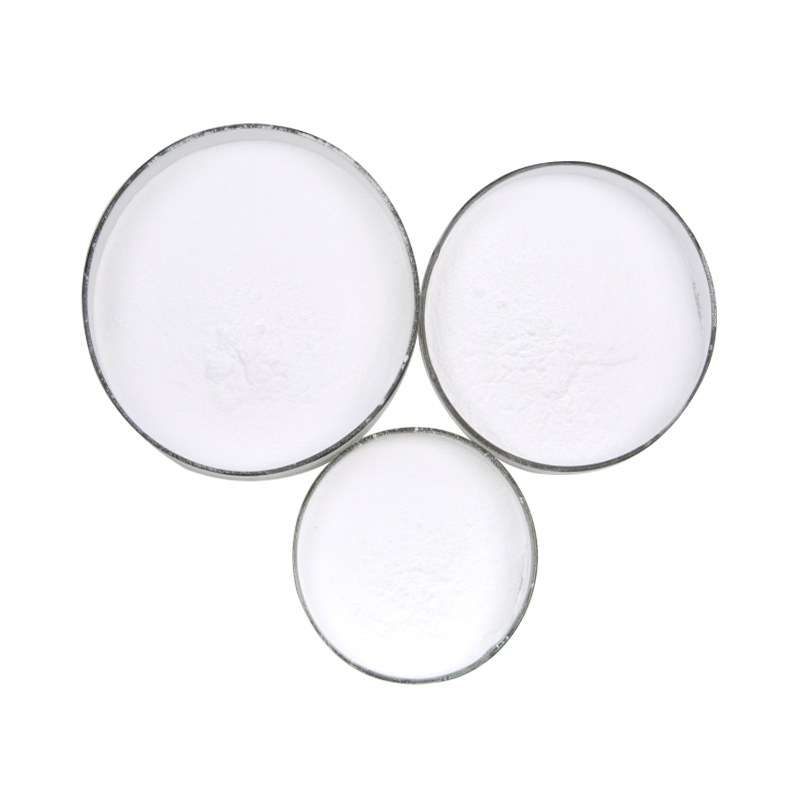 Calcium/Zinc One Pack Heat Stabilizer for PVC Window ProfilesCa/Zn one pack heat stabilizer for PVC window profiles, environmentally friendly, with excellent initial coloring, heat stability, and dispersibility for consistent processing.View Product →
A well-matched stabilizer package holds colour and molecular weight through the extruder, which keeps yield strength where it belongs. Beyond stabilisation, four further adjustments usually move the needle.
- Raise the impact modifier level in small increments and re-test until the whitening threshold clears the specification.
- Balance internal and external lubricants so gelation reaches target without slipping at the die.
- Control filler particle size and surface treatment to reduce interfacial debonding under load.
- Lower residual stress through slower cooling, gentler calibration and less downstream over-stretching.
A Buying Checklist for Stabilizer Selection
When stress whitening keeps appearing on the reject shelf, the stabilizer specification is worth re-examining alongside the processing line.
Stabilizers do not directly prevent whitening, but they protect the molecular weight that decides how much strain a part can take. A system that holds colour well but lets the compound degrade a little during a long run will show up as whitening on a bending test long before it shows up as yellowing on the line. Product pages for window profile and pipe applications explain how stabilizer choice is matched to those specific processing routes, and the broader profiles and window systems overview is a useful starting point for that comparison.
The checklist below covers the questions worth asking before a specification is locked in.
01
What heat history will the compound see on the actual extruder, not the lab line?
02
What is the expected fusion level, and how is it verified in production?
03
Which impact modifier system is in the formula, and what cavitation behaviour does it show?
04
How does the stabilizer behave under a long run with a slow line speed and high residence time?
Frequently Asked Questions
Is stress whitening the same thing as a crack?
No. Stress whitening is a subsurface optical change caused by local yielding, micro-voids and crazes. A crack is a true separation that travels through the material. The two can occur together, which is exactly why a whitened zone should be inspected rather than dismissed.
Will a better heat stabilizer stop PVC from whitening?
Not on its own. Stabilizers protect molecular weight and colour during processing, and higher retained molecular weight raises the strain a part can absorb before whitening. But if residual stress, under-fusion or an insufficient impact modifier level is the real driver, those have to be addressed as well.
Can stress whitening be reversed?
In some thermoplastics, moderate heating above the glass transition temperature allows voids to close and the whitened zone to fade. In rigid PVC the glass transition sits around 80 degrees Celsius, so recovery is limited and unreliable in service. Treating it as a permanent defect and preventing it upstream is the more dependable approach.
Which PVC products are most at risk?
Rigid products with tight corners, sharp radius transitions and rapid cooling are the usual candidates. Window profiles, pipe fittings, thin calendered sheet and foam board show it most often, while thicker sections tend to hide it until a bending or impact test brings it out.

Let’s Build the Future Together
We are a company specializing in the research, development, production, and sale of PVC stabilizers.
Get a Quote
Product Categories
Quick Links
Contant us
-
 +86-15206141222
-
 zptian2008@163.com
-
 No. 66, Xingsheng Road, Nandu Town, Liyang City, Jiangsu Province, China
Copyright © JiangSu Uniwel Chemistry Co.,Ltd. All Rights Reserved.
 PVC Stabilizer Manufacturer PVC Stabilizer Supplier PVC Stabilizer Factory in China